


More than half of all web traffic now comes from mobile devices.
That simple shift has changed the rules of branding.
A domain that worked perfectly ten years ago may now feel long, awkward, and difficult to remember on a smartphone.
Today’s most successful digital brands have adapted.
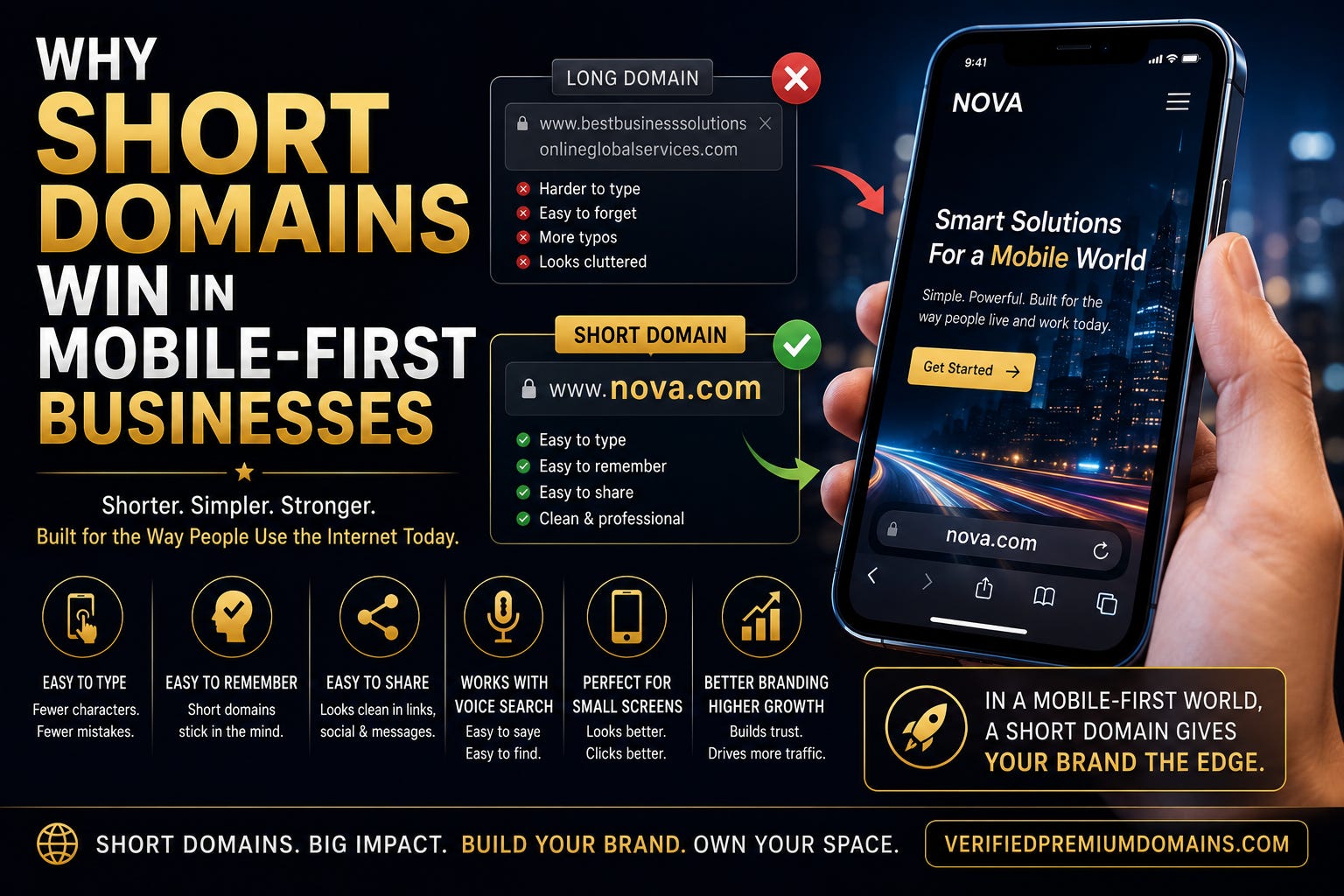
They’ve embraced shorter, cleaner domains that are easier to type, easier to recognize, and easier to share.
If your business depends on mobile users, here’s why a short domain can become one of your biggest competitive advantages.
Mobile Users Have Less Patience
Desktop users have:
Full-sized keyboards
Large monitors
Multiple browser tabs
Mobile users have:
Small keyboards
Limited screen space
Constant distractions
Short attention spans
Every additional character increases effort.
Every unnecessary word creates friction.
The easier your domain is to type, the more likely users are to visit your website without making mistakes.
Short Domains Reduce Typing Errors
Typing on a smartphone isn’t perfect.
People accidentally:
Miss letters
Hit the wrong keys
Forget hyphens
Skip words
Compare these two domains.
Bright.com
vs.
BrightBusinessAutomationSolutions.com
One takes seconds.
The other practically invites mistakes.
The fewer characters users need to type, the fewer opportunities there are for errors.
Small Screens Reward Simplicity
On a mobile device, your domain appears in many places:
Search results
Browser address bars
Social media bios
Ads
Email previews
Messaging apps
Long domains can be truncated, making them harder to recognize at a glance.
Short domains remain clean, readable, and memorable across every screen size.
Mobile Branding Is Visual
People often don’t read every word on a screen.
They scan.
A short domain stands out immediately.
It becomes part of your visual identity.
Consider these examples.
Nova.com
Pulse.com
Vertex.com
Each is instantly recognizable, even on a small display.
Sharing Should Be Effortless
Imagine a customer sending your website through:
WhatsApp
Slack
SMS
LinkedIn
Discord
A short domain is easier to copy, paste, and remember.
It also looks cleaner in conversations and previews.
The simpler the URL, the more likely people are to share it.
Voice Search Is Growing
Increasingly, users aren’t typing at all.
They’re saying:
“Open Nova.”
“Visit Bright.”
“Search for Atlas.”
Voice assistants work best with names that are:
Short
Clear
Easy to pronounce
Complicated domains are more likely to be misunderstood or misinterpreted.
As voice interfaces continue to grow, simple brand names gain another advantage.
QR Codes Still End With a Domain
QR codes have become a common way to drive mobile traffic.
Restaurants, product packaging, business cards, billboards, and event booths all use them.
But what happens after someone scans the code?
They often glance at the destination domain.
A short, premium domain reinforces trust.
A long, cluttered URL can create hesitation.
The QR code gets the click.
The domain confirms credibility.
Mobile Advertising Rewards Strong Branding
Whether you’re running ads on:
Google
Instagram
Facebook
TikTok
LinkedIn
YouTube
your domain becomes part of the advertisement.
A short domain:
Looks more professional
Fits better in ad layouts
Is easier to remember after someone scrolls away
The goal isn’t just getting the click.
It’s making sure people remember your brand after they’ve seen it.
Fewer Characters, Stronger Recall
Memory works through repetition and simplicity.
People are far more likely to remember:
Orbit.com
than
OrbitBusinessTechnologySolutions.com
A shorter domain reduces cognitive effort.
That makes it easier to recall later when customers search for your business again.
Premium Domains Were Built for Mobile
Many premium domains share similar characteristics.
They are:
One word
Two words at most
Easy to pronounce
Easy to spell
Short enough to fit everywhere
These qualities weren’t designed specifically for smartphones.
But they happen to be perfectly suited for today’s mobile-first world.
The Hidden Cost of Long Domains
A long domain doesn’t just affect typing.
It can also lead to:
Lower direct traffic
More misspelled searches
Reduced word-of-mouth referrals
Lower brand recall
Weaker ad performance
Customer confusion
Each issue may seem small on its own.
Together, they can create significant friction as your business grows.
Think Like Your Customer
The next time you choose a domain, imagine someone using only one thumb on a crowded train.
Would they:
Type it correctly?
Remember it later?
Share it with a friend?
Recommend it in a conversation?
If the answer isn’t an easy “yes,” your domain may be working against you.
Short Domains Are Built for the Future
Technology continues to move toward:
Mobile devices
Wearables
Voice assistants
Smart displays
Connected cars
All of these interfaces favor simplicity.
The businesses that invest in short, memorable domains today are preparing for the way customers will interact with brands tomorrow.
Final Thoughts
A mobile-first business needs a mobile-friendly brand.
That means more than having a responsive website.
It means choosing a domain that’s easy to type, easy to remember, and easy to trust—no matter where customers discover you.
Short domains don’t win because they’re trendy.
They win because they reduce friction.
And in business, every bit of friction removed creates another opportunity for growth.